

The chilling effect on the VC funding has set in from the third quarter of CY21 as evident in the chart below —


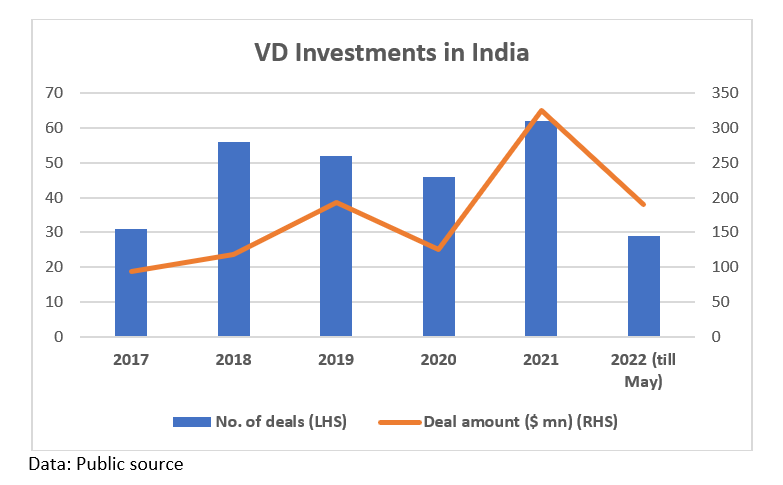
As VC funding is drying up, emerging enterprises and start-ups are increasingly shifting towards non-equity-based funding, in other words, debt. Talking about debt, it could be available from banks, however, that is an option mired with difficulties such as placing collaterals or pledging shares against the loan. Moreover, bank loans tend to be standardised with repayment schedules not matching the underlying cash flows generated by the entity’s business. In such a situation, Venture Debt (VD) becomes an alternative, however again, that is an option, whose terms are not entirely based on debt and include an equity component.
VD is a type of loan offered to early-stage, high-growth companies, which are already backed by VC firms. The VD deals are structured to include an equity component, aka “equity kicker”, which is there in the form of warrants, preference shares, rights, or options. Equity kickers serve to sweeten the deal and provide returns over and above the fixed income portion of the deal.
VD can be done by dedicated VD funds. The factors which make VD favourable are
- It can be offered to companies that may not be cash flow positive yet
- It can be provided to companies without existing collateral
- It does not require a valuation to be set for the business
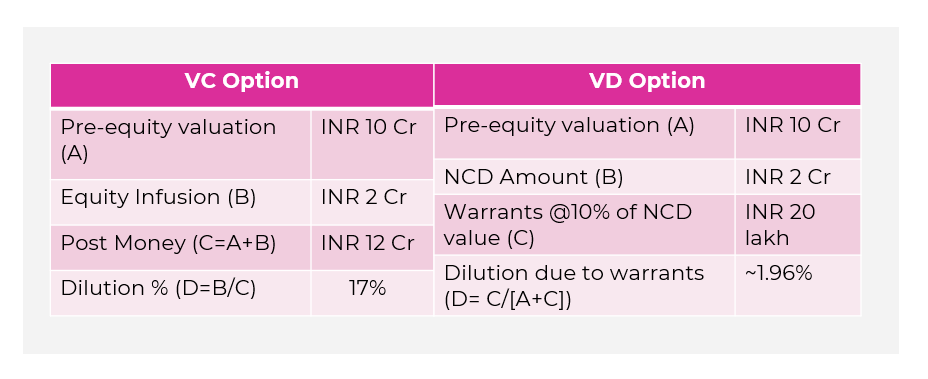
- It gives way to less dilution for existing shareholders compared to VC funding as explained below
Performing Credit – white space in the Indian debt market
As we move away from AAA to AA rated bonds down to BBB rated companies, a lucrative opportunity for investors exists in a white space, known as the Performing Credit (PC), that exists between mutual funds and distressed debt funds & others at the two extremes. To better understand the depth and coverage of the market let’s see how the market players are positioned given their yield and ratings.

Profitability
PC space consists of papers issued by rated and stable companies which are undiscovered and yield high risk-adjusted returns. These are the companies that are operating mature and established business models with steady cash flows. Over and above, as the below chart suggests, over 90% of these companies in any rating bracket are EBITDA positive (in FY21).
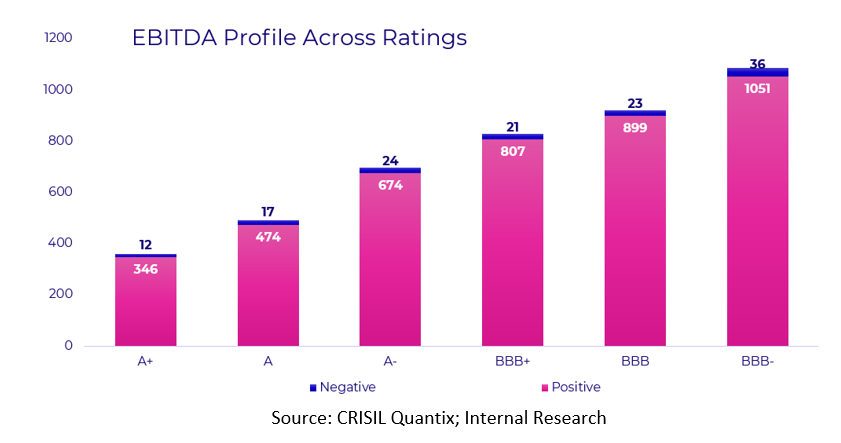

However, when we analysed ~80 VD investee portfolio companies we found that they are largely EBITDA negative with limited ability to throw cashflows.

The VD portfolio comprises companies that are typically unrated unlike the companies in the PC space. This could make the asset quality in the VD universe inferior, although VD investors have lately been considering the underlying business model, path to profitability, positive unit metrics, and longer runways for evaluating their investment decisions.
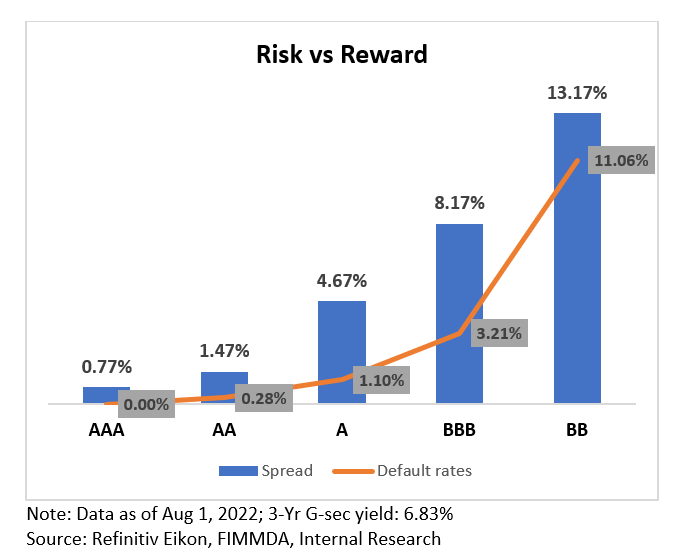
The asset quality in the PC space can be evaluated by plotting default rates across the rating scale and comparing them with respective yield spreads over 3-year G-sec.
Apart from the asset quality, investors in VD funds need to look at the pricing of future rounds of VC investment, which determines the upside potential to overall returns. VD funds fundamentally rely on VCs to price the investee companies fairly, which enhances the value of the equity kicker. If they are not, the value of the equity kicker gets affected thereby affecting the overall returns from the fund. However, the returns from funds in the PC space are predictable as they are entirely dependent on returns from debt instruments making the risk-return spectrum not as distorted as VD funds.

Disclaimer:The views provided in this blog are the personal views of the author and do not necessarily reflect the views of Vivriti. This article is intended for general information only and does not constitute any legal or other advice or suggestion. This article does not constitute an offer or an invitation to make an offer for any investment.